The first scooter ride can feel easier than it is. The deck looks simple, the throttle feels light, and the street seems open until a pothole, parked car door, or distracted driver changes the whole mood in half a second. Good electric scooter tips matter because most beginner mistakes happen before the ride even feels risky. You are not learning a toy. You are learning a small vehicle that shares space with cars, bikes, pedestrians, curbs, wet leaves, and impatient traffic.
Across many American cities, scooters have become part of the daily short-trip routine. People use them for campus rides, downtown errands, bus stop connections, and quick neighborhood runs. That convenience is exactly why safety needs to come first. A short trip still deserves smart choices, especially when you are riding near traffic or on uneven pavement. For riders comparing safer local transportation choices, community mobility resources can help frame scooters as part of a bigger everyday movement plan.
A safe ride starts before the wheels roll. Once you understand balance, gear, local rules, and street judgment, the scooter stops feeling unpredictable. You do not need fear. You need habits that protect you before trouble gets close.
Electric Scooter Tips That Start Before You Ride
Most beginner crashes do not begin with speed. They begin with rushed decisions. A loose handlebar, low tire, weak brake, or badly fitted helmet can turn a calm ride into a hard lesson before you leave the driveway. Preparation is not boring. It is the part of riding that gives you room to enjoy the trip.
Why a Two-Minute Check Saves the Whole Ride
A scooter should never be treated like something you simply hop on and trust. Start with the tires, because they decide how the scooter grips the ground. Air-filled tires need proper pressure, while solid tires need a quick look for chunks, cracks, or uneven wear. A soft tire can make steering feel heavy. A damaged tire can make a small bump feel like a curb.
Brakes deserve the same attention. Roll the scooter forward and squeeze the brake before stepping fully on the deck. The scooter should stop cleanly, without grinding, slipping, or feeling delayed. A brake that “mostly works” is not enough when a car pulls from a driveway or a pedestrian steps off a curb.
Battery level also matters more than beginners expect. A low battery can reduce power on hills or leave you pushing the scooter across town. In colder U.S. cities, battery range may drop faster than the app or display suggests. That does not mean the scooter is bad. It means you plan with a buffer, especially on your return ride.
How Your First Practice Area Changes Everything
The best first ride is not on a busy street. It is in an empty parking lot, a quiet paved path, or a wide driveway with no traffic pressure. This is where beginner scooter safety becomes a skill instead of a theory. You need space to start, stop, turn, and look over your shoulder without worrying about a driver behind you.
Practice slow starts first. Many beginners jerk the throttle because they expect the scooter to behave like a bicycle. It does not. Electric power arrives fast, even on beginner modes. Keep one foot planted on the deck, push off gently with the other foot, then ease into the throttle once the scooter is already moving.
Turning is where confidence often gets fake. A scooter has small wheels, so it does not forgive sharp moves the way a bike sometimes can. Make wide turns, keep both hands steady, and look where you want to go. The scooter follows your eyes more than you think. That sounds simple until you stare at the curb and roll right toward it.
Gear, Visibility, and Body Position for Safer Control
Once the scooter feels familiar, the next danger is comfort. Riders relax too early. They wear headphones, skip the helmet, stand stiff, or ride at dusk in dark clothing. Safe control comes from making your body and gear work with the scooter instead of fighting it.
What Protective Gear Actually Does in Real Life
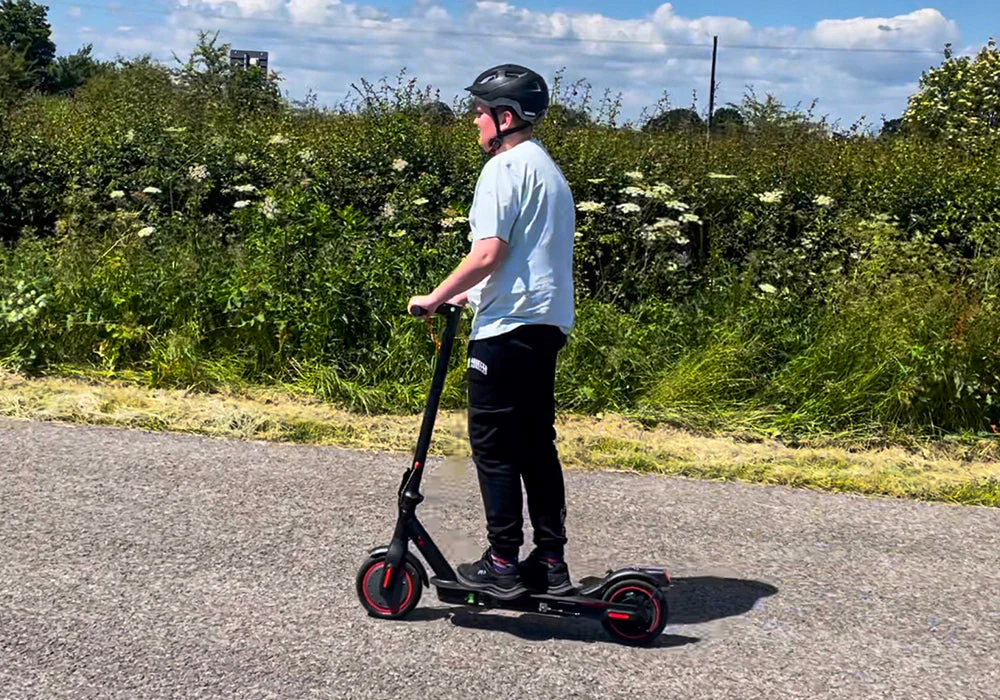
A helmet is not optional for smart riders. Many U.S. state and city rules vary by rider age and location, but the pavement does not care about the legal minimum. A certified bike or scooter helmet protects the part of you that cannot be repaired with a bandage. Wear it level, buckle it snug, and replace it after a serious impact.
Gloves help more than beginners expect. In a fall, your hands usually reach the ground first. Thin riding gloves can protect your palms and help you keep grip when the handlebar gets sweaty or cold. Closed-toe shoes also matter. Sandals and slides belong nowhere near a scooter deck, especially when stopping fast.
Reflective details are another quiet advantage. Safe electric scooter riding depends on being seen early, not at the last second. A reflective ankle band, bright jacket, or small clip-on light can make you stand out to drivers turning across your path. Visibility is not vanity. It is a warning system you wear.
Why Your Stance Matters More Than Speed
Your feet should not sit side by side like you are standing in an elevator. A staggered stance gives you balance when the scooter accelerates or brakes. Put your stronger foot forward if it feels natural, then angle your rear foot slightly for support. Keep your knees soft. Locked knees turn every crack in the pavement into a shock through your whole body.
Your hands should stay relaxed but firm. Beginners often grip the bars too tightly, which makes the scooter twitchy. Hold enough pressure to steer, but not so much that every bump becomes a panic move. Good riders look calm because their body has learned to absorb movement.
Weight shift is the hidden skill. Lean slightly back when braking. Lean gently forward when climbing a hill. Stay centered when rolling over rough pavement. A scooter is small, so your body weight affects it fast. Once you understand that, the ride feels less like balancing on a board and more like guiding a machine.
Street Awareness and Local Rules Beginners Cannot Ignore
A scooter ride gets harder when other people enter the picture. Cars turn without seeing you. Pedestrians change direction. Cyclists pass silently. Delivery trucks block bike lanes. The rider who only watches the pavement is already behind. Street awareness turns your ride from reactive to prepared.
How to Read Traffic Before It Surprises You
Parked cars are not harmless. A door can open without warning, and a scooter rider has less time to react than a driver in a full lane. Leave space when passing parked vehicles, even if that means slowing down. In busy American downtowns, this one habit can prevent a nasty crash.
Intersections deserve extra caution. Drivers may look for cars and miss scooters because your profile is smaller. Make eye contact when possible, slow before crossing, and never assume a turning car will yield. Safe electric scooter riding works best when you act visible but never depend on being noticed.
Driveways can be sneaky too. Cars backing out of apartment complexes, gas stations, and shopping plazas may not see you from the sidewalk or bike lane. Watch wheel movement, brake lights, and driver posture. A car does not need to move far to block your path. Sometimes six inches is enough.
Where Scooter Riding Rules Change by City
America does not have one single scooter rulebook for every street. Cities often set their own rules for sidewalk riding, speed limits, parking zones, helmet use, and where scooters may operate. Scooter riding rules in Austin, Denver, New York, or Los Angeles may not match the rules in a smaller college town. That is why checking local guidance before riding is part of responsible ownership.
Sidewalk riding is one of the biggest confusion points. Some places allow it in limited areas. Others restrict it or ban it in business districts. Even where it is allowed, sidewalks require a slower mindset because pedestrians are unpredictable. A scooter beside a stroller, dog leash, or café entrance needs patience, not speed.
Parking rules matter too. A poorly parked scooter can block wheelchair access, building entrances, curb ramps, or bus stops. That creates problems for everyone and fuels public frustration toward riders. Good scooter riding rules are not only about avoiding tickets. They are about proving scooters can fit into shared spaces without making life harder for others.
Building Confident Habits for Everyday Scooter Trips
Skill grows through repetition, not one brave ride. The goal is not to ride faster each week. The goal is to make better decisions without needing to think so hard. Once safety habits become automatic, you can handle everyday trips with less stress and more control.
How to Plan Routes That Feel Calm Instead of Chaotic
The shortest route is not always the smartest route. A calm side street with smooth pavement can be better than a fast avenue with heavy traffic. Many riders learn this after one stressful trip where every block feels like a test. Route choice is where experience starts to show.
Bike lanes can help, but they are not magic. Some lanes end suddenly, collect debris, or run beside parked cars. Look ahead for broken glass, drain grates, uneven patches, and delivery vehicles. Electric scooter gear helps protect your body, but route planning protects your attention.
Weather changes the whole ride. Rain reduces traction, painted road markings get slick, and leaves can hide potholes. Cold weather can stiffen your hands and reduce battery range. Wind can push a standing rider sideways faster than expected. Beginners should treat bad weather as a reason to slow down or skip the ride, not as a chance to prove confidence.
Why Mature Riders Know When to Slow Down
Speed feels fun until you need to stop. Small scooter wheels do not roll over hazards like car tires or mountain bike tires. A pothole that barely annoys a driver can throw a scooter rider forward. That is why electric scooter gear and smart speed choices belong together. Protection helps after a mistake, but judgment prevents the mistake from becoming a crash.
Crowded areas call for restraint. Near campuses, waterfront paths, stadium exits, and downtown sidewalks, people move in messy patterns. Someone may step sideways while checking a phone. A child may run toward a parent. A dog may cross the path without warning. You cannot control any of that. You can control your speed.
Confidence should feel quiet. The best riders are not the ones weaving through traffic or flying past pedestrians. They are the ones who arrive without drama, park without blocking anyone, and make the ride look uneventful. Beginner scooter safety eventually becomes a kind of respect: for your body, for the people around you, and for the street you share.
Conclusion
Scooters reward riders who take them seriously. They are simple to learn, but they are not simple enough to ignore. Your first few rides should build judgment, not ego. The rider who checks the scooter, wears the gear, studies the street, and respects local rules will improve faster than the rider who treats safety like an afterthought.
The strongest electric scooter tips are not tricks. They are habits. Start slower than you think you need to. Leave more space than pride wants to allow. Watch drivers before they watch you. Choose calm routes when busy ones offer nothing but stress. A scooter can make short trips easier across American neighborhoods, campuses, and city centers, but only when your decisions stay ahead of your speed.
Make your next ride a practice ride, even if you are heading somewhere ordinary. Check the scooter, wear the helmet, plan the route, and ride like arriving safely is the point.
Frequently Asked Questions
What are the best beginner scooter safety habits for first rides?
Start in a quiet paved area, wear a helmet, check the brakes, and practice slow turns before riding near traffic. Keep both hands on the bars, use a staggered stance, and avoid busy streets until starting, stopping, and turning feel natural.
How fast should a new electric scooter rider go?
A new rider should stay at a speed that allows a calm full stop within a short distance. Beginner mode is best for early rides. Speed should increase only after the rider can brake smoothly, scan traffic, and handle uneven pavement without panic.
What electric scooter gear should beginners wear?
A fitted helmet, closed-toe shoes, and gloves should be the baseline. Reflective clothing or lights help when riding near traffic, at dusk, or in shaded areas. Knee and elbow pads are smart for younger riders or anyone practicing in rougher spaces.
Are scooter riding rules the same in every U.S. city?
Rules change by city and sometimes by neighborhood. Sidewalk riding, parking, helmet requirements, and speed limits may differ. Check your local transportation department or city website before riding, especially if you use a scooter in downtown or campus areas.
Can beginners ride electric scooters on sidewalks?
Some cities allow sidewalk riding, while others restrict it or ban it in certain districts. Even when allowed, beginners should ride slowly and yield to pedestrians. Sidewalks can be harder than they look because people stop, turn, and step sideways without warning.
How do I make safe electric scooter riding easier at night?
Use front and rear lights, wear reflective clothing, and slow down before intersections. Avoid dark roads with broken pavement or no shoulder. Night riding gives you less time to spot hazards, so visibility and lower speed matter more than usual.
What should I check before riding an electric scooter?
Check tire condition, brake response, handlebar stability, battery level, lights, and the folding latch if your scooter has one. A short inspection can catch problems before they turn dangerous. Never ride if the brakes feel weak or the steering feels loose.
Is an electric scooter safe for daily commuting?
It can be safe when the route fits the scooter. Smooth streets, bike lanes, short distances, and predictable traffic make commuting easier. Poor pavement, high-speed roads, bad weather, and weak visibility raise the risk, so route planning matters as much as riding skill.